
World Affairs and Foreign Coverage
Regional Information Included in Local-Language News but Omitted From International Editions
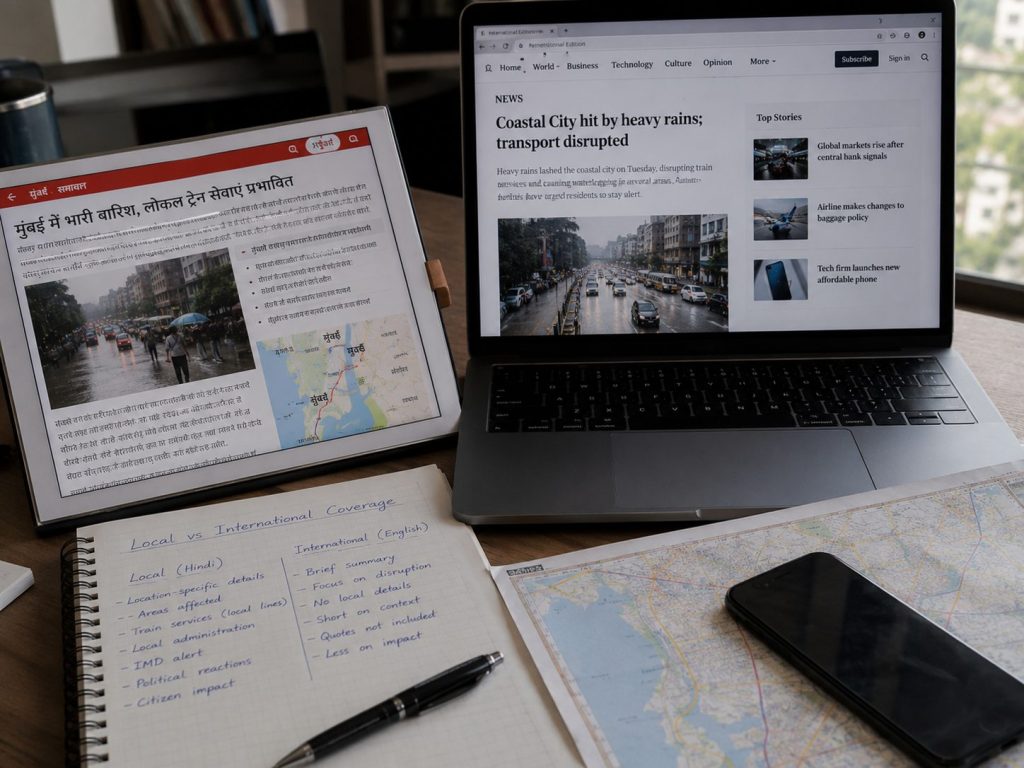
An international news edition is often useful for understanding the main event and why it matters beyond one country. However, it may leave out the district, agency, transport route, legal provision, local deadline, or affected group that a reader needs for research or practical action.
The local-language article may contain those details, but it should not automatically be treated as the “complete” or more accurate version. The two stories may have different publication times, reporters, audiences, or update histories.
A reliable comparison asks:
Are these articles describing the same stage of the event, and which details can be confirmed through an original local source?
Make Sure You Are Comparing the Same Version of the Story
Start with the publication and update times. A Korean-language article posted in the morning may describe an initial announcement, while the international edition published later may include a revised figure or official response. The reverse can also happen when the local article receives a later update that is not added to the international page.
Then compare the source line. One article may be original reporting, while the other is a shorter adaptation based on a news agency, press release, or correspondent’s report. Similar headlines do not prove that one is a direct translation of the other.
| What to Compare | Why It Matters |
|---|---|
| Publication and update time | Shows whether one version contains later information |
| Reporter, news agency, or source line | Reveals whether the articles came from the same reporting |
| Event date and location | Prevents confusion between related incidents |
| Numbers, names, and quotations | Helps identify later corrections or different source material |
| Links and attached documents | May lead to the original notice, report, or dataset |
Before deciding that information was removed, confirm that both articles refer to the same announcement, meeting, court decision, accident, policy stage, or data release.
A difference may be editorial shortening, but it may also result from an update, correction, translation choice, or separate reporting process.
Record the Local Details That Affect Understanding or Action
Do not compare every sentence. Focus on the information that changes how the event should be understood or what the reader should do.
For a Korean story, useful regional details may include the exact district or neighborhood, subway station or bus route, responsible ministry or local office, applicable regulation, application period, eligibility group, emergency contact, and the complete name and title of the person quoted.
Use a short comparison record:
| Detail to Recover | Where to Check |
|---|---|
| Exact place or affected route | Local article, municipal notice, transport operator |
| Responsible authority | Ministry, city, district, police, court, or regulator |
| Law or policy basis | Korean legal text or official policy document |
| Dates and deadlines | Original notice, application page, or event schedule |
| Affected residents or businesses | Local government or agency announcement |
| Statistics | Official table, dataset, or methodology note |
| Full quotation | Local article, transcript, video, or written statement |
For Korean government or municipal matters, official local sources should be used to verify the actionable details. Seoul maintains an official English press-release section, while KOSIS provides national, international, and regional indicators. The Bank of Korea’s ECOS system provides statistics in areas such as national accounts, prices, finance, exchange rates, and external transactions.
Use these sources to confirm the fact, not simply to find a page that repeats the same headline. For example, a news report may say that “city authorities” introduced a measure, while the municipal notice identifies the responsible department, affected districts, start date, and contact number.
The local article can still contain errors, outdated statements, or incomplete attribution. Treat it as a source of leads, then verify important operational, legal, and statistical details independently.
Protect the Meaning of Korean Names, Laws, and Official Statements
Automatic translation is useful for understanding the general subject, but it can distort proper nouns, government titles, administrative units, legal terms, and the strength of a statement.
Seoul’s multilingual site explicitly states that some pages are provided through automatic translation and may contain errors. This is a useful reminder not to copy translated names or instructions without checking the original Korean page.
For the names of public institutions, programs, facilities, and administrative terms, look for the English wording used by the organization itself. Korea also maintains official guidance on translating and writing public terminology in English, Chinese, and Japanese.
When there is no stable English name, keep the Korean term in parentheses on first mention. This helps readers locate the source and prevents two different translations from being mistaken for two separate agencies or programs.
Legal language needs extra caution. Korea’s National Law Information Center states that foreign-language translations are provided for reference and have no official legal effect; when the foreign-language wording differs from the Korean law, the Korean text takes precedence.
Also compare the level of certainty in the original sentence. These expressions should not be treated as equivalent:
- Is considering
- Plans to introduce
- Has proposed
- Is expected to
- Will implement
- Has entered into force
A translated international article may shorten these distinctions. Before citing a policy as final, confirm whether it is only being discussed, formally announced, enacted, or already in operation.
Use the International Edition for Context and the Local Sources for Precision
The two editions often serve different purposes.
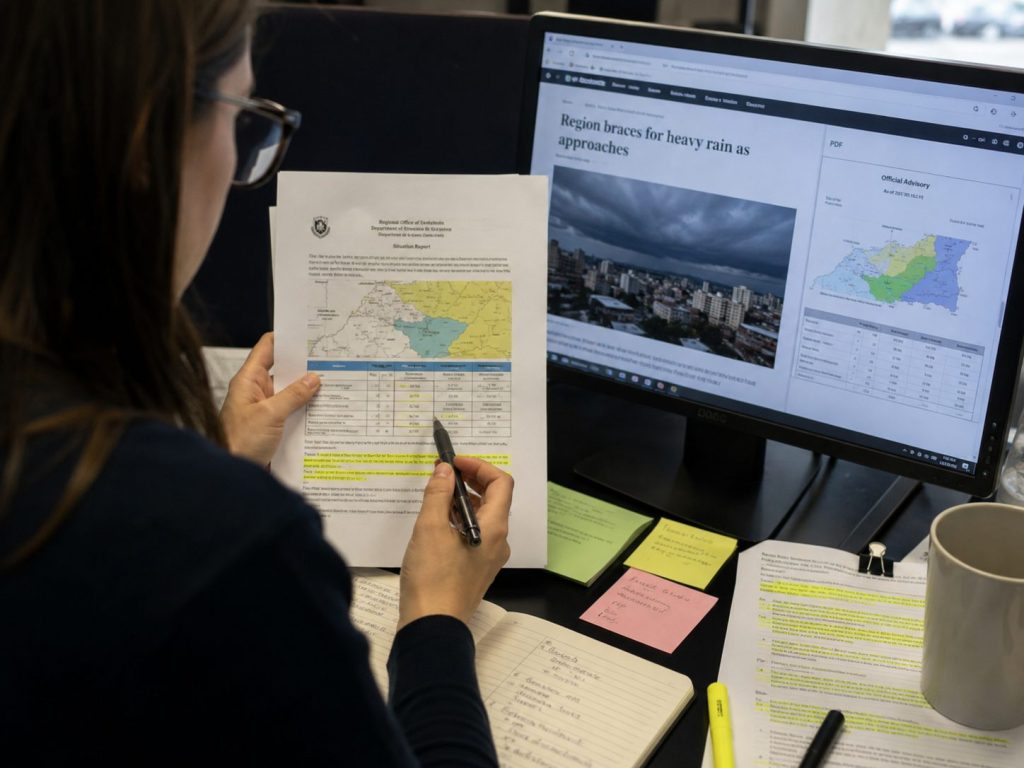
Use the international article to understand the broader significance, foreign reaction, or background that local readers may already know. Use the Korean-language article to identify local places, institutions, speakers, and affected groups. Use the original government notice, legal text, statistical table, or operator announcement to verify details that affect decisions.
A practical workflow is:
Confirm the same event and update stage → list the missing local details → verify them through Korean official sources → check translation and terminology → cite each source according to what it actually establishes.
When writing or sharing the result, clearly separate the layers:
The international edition describes the policy as a nationwide reform. The Korean report identifies the first participating districts, while the municipal notice provides the implementation date and eligibility conditions.
This approach avoids treating either edition as the single complete record. The international version provides an accessible overview, the local-language report restores regional context, and the original source confirms the details that matter.